Between Tides
Public Art Fund
Rockaway Beach, Queens, NY | 2026
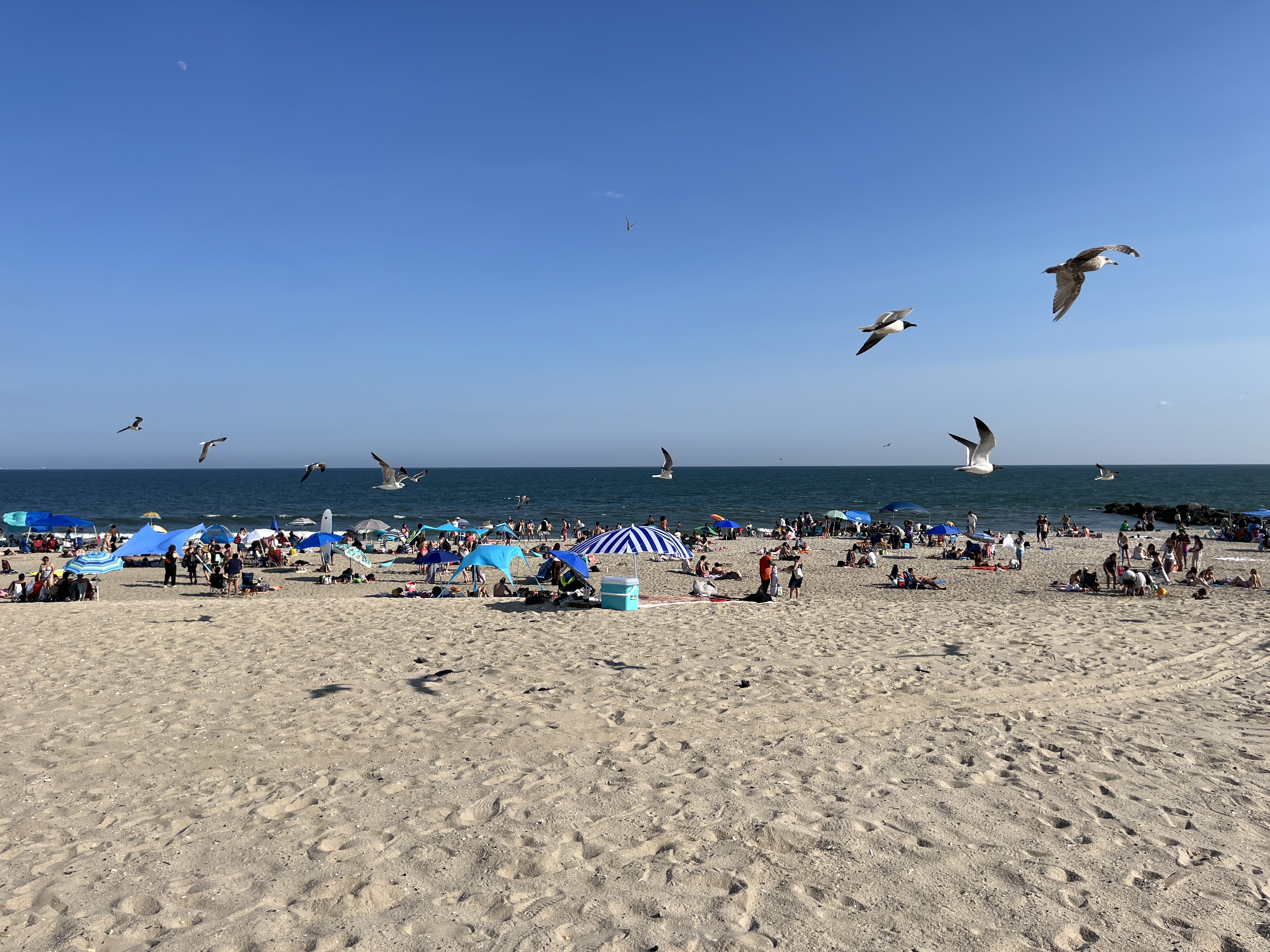
Between Tides brings together six artists—Moko Fukuyama, Ilana Harris-Babou, Las Hermanas Iglesias, Carlos H. Matos, Amalia Pica, and the collective SUPERFLEX—to rethink ping-pong tables as playable sculptures. These works invite beachgoers to approach the game in unexpected ways, transforming a familiar activity into a space for experimentation and new connections. Responding to the diverse cultural and ecological landscape of Rockaway Beach, the artists draw from sculpture, myth, and public engagement to expand the game’s symbolic and social dimensions.
Centered on community participation, Between Tides builds on the layered history of table tennis and offers fresh perspectives on play. Originally a parlor game for the elite in Victorian England, ping-pong later became a global pastime, a tool for diplomacy between the United States and China, and eventually an Olympic sport. The game’s simplicity allows it to transcend class, race, age, and gender, bringing people together across differences. Between Tides continues a tradition of artists who, since the 1970s, have embraced ping-pong as a platform for creative exchange, rule-breaking, and challenging expectations. Fostering shared encounters, this exhibition highlights how artists can enrich daily life in imaginative ways.
Between Tides is curated by Gabriela López Dena.
Press
- Hillarie M. Sheets, “Ping-Pong’s Endless Summer at Rockaway Beach.” The New York Times, June 26, 2026
- Alisha Allison, “Paddle Over to These Ping-Pong Sculptures in the Rockaways.” Hell Gate, July 10, 2026
- Elle McLogan, “Sculptures Become Ping-Pong Tables at Rockaways Beach.” CBS News New York, July 10, 2026
- Roger Clark, “Rockaways Beach Exhibit Features Unique Ping-Pong Tables from 6 Artists.” Spectrum News NY1, July 9, 2026
- Laura Ratliff, “You Can Now Play Ping-Pong on Giant Works of Art at Rockaway Beach.” Time Out New York, July 2026
- “Between Tides Brings Unique Ping-Pong Tables to the Beach.” The Rockaway Times, July 2026
about the artworks
Moko Fukuyama
(b. 1981, Chiba, Japan)Old School, 2026
Aluminum boat, reclaimed wood, plywood, automotive paint
A salvaged boat from Marina 59 in the Rockaways and a ping-pong table top are gripped by a giant sea monster. The mysterious, octopus-like being evokes mythical figures like the Scandinavian Kraken—a creature that has fueled sailors’ superstitions since the 1700s—or the Japanese Akkorokamui—a sea deity said to appear on calm waters before quickly turning them tumultuous. Fukuyama crafted the sea monster’s tentacles from a reclaimed walnut tree and finished them with bright automotive paint, giving them an alluring, otherworldly presence. The aluminum boat, prized in the 1950s for its innovative design, lies capsized on the shore, suggesting the impermanence of human-made objects and the forces of nature that eventually consume them. Through a mix of nautical imagery and playfulness, Old School revisits legends of the sea, reflecting on the enduring power of myths and how they shape our understanding of the vast, uncontrollable forces of nature.
Las Hermanas Iglesias
(founded 2005. Lisa Iglesias b. 1979, Queens, NY; Janelle Iglesias b. 1980, Queens, NY)
DiMeLo, 2026
Stainless steel, ready-made musical instruments
Each game played on this musical sculpture creates a live composition. Inspired by the artists’ childhood experiences of collaborative play, the table becomes a space for musical improvisation. Percussion instruments associated with the many cultures that shape Queens are embedded in the surface of the table, inviting players to treat it as a music-making object. One side of the sculpture is custom-made and includes a glockenspiel—a series of tuned metal bars whose bright tones echo metallophone traditions found across Europe and Asia. The other side features a set of ready-made instruments, including handpan, tom drums, and cymbals, all of which have ancient origins and continue to be used in diverse settings, from Indian temples to jazz bands and modern orchestras. As participants play a match, they celebrate the borough’s unique cultural mix, varied migration stories, and ever-evolving sonic landscape.
Ilana Harris-Babou
(b. 1991, Brooklyn, NY)for those of us who live at the shoreline, 2026
Terrazzo, concrete, handmade ceramic tiles, powder-coated steel
Four sculptures in terrazzo and concrete invite visitors to engage in unstructured discovery. Assorted ceramic beach items, including a book, bottle, and sunglasses, lie scattered across a ping-pong table, disrupting the typical flow of the game. Nearby, a seating area with a beach umbrella holder and ceramic tiles hinting at board games offers space for rest, recreation, and interaction. Harris-Babou’s process was inspired by hundreds of drawings created by beachgoers during workshops led by the Queens-based collective Mobile Print Power along the Rockaway Beach boardwalk in the summer of 2024. Borrowing its title from the first line of Audre Lorde’s A Litany for Survival, the artist imagines the shoreline as a space of possibility, inviting individuals to find their own voice. Drawing on the principles of "free play," Harris-Babou encourages open-ended participation and improvisation, shifting the focus from mastery to exploration.
Carlos H. Matos
(b. 1983, CDMX, Mexico)Tlachco, 2026
Aluminum, volcanic stone, powder-coated steel
Matos merges the physical structure of ping-pong with a scaled-down version of an Ulama court. Ulama, a Mesoamerican ballgame considered one of the oldest sports in the world, holds both recreational and ritual significance and is still played today. The game symbolizes cosmic battles, and its courts, or tlachco, were often regarded by the Aztecs and Maya as portals to the underworld. In Ulama, two teams use their hips, forearms, and thighs to strike a rubber ball, scoring points by pushing it across the opposing team’s end line or by the challenging feat of passing it through hoops anchored to the court’s tilted side walls. Echoing the way Ulama is played and referencing the court’s architectural elements, Matos creates a game that blends ancestral tradition with contemporary leisure. The result is a transcultural experience that connects past and present, inviting players to engage with layers of history.
Amalia Pica
(b. 1978, Neuquén, Argentina)Fair Play, 2026
Fiberglass, powder-coated steel, fabric
Pica’s sculpture consists of eight tabletops displaying the International Code of Signals, a colorful system sailors use to communicate between ships and share information visually. Each module features a symbol from the language’s alphabet, together spelling out “FAIR PLAY.” Their staggered configuration invites friends and strangers to join several simultaneous matches, turning what is typically a two-person game into a multiplayer experience. This setup encourages up to ten people to participate and emphasizes the collective nature of play. Fabric flags suspended between two vertical posts read “COME PLAY,” extending an invitation to socialize and have fun. These flags were made in collaboration with RISE (Rockaway Initiative for Sustainability and Equity) that inspires local residents to care for their environment and community.
SUPERFLEX
(founded 1993; Bjørnstjerne Reuter Christiansen, b. 1969, Copenhagen; Jakob Fenger, b. 1968, Roskilde; Rasmus Rosengren Nielsen, b. 1969, Hjørring; all Denmark)Fish Ping-Pong, 2026
Cantera stone
This pink stone structure serves a dual purpose: hosting ping-pong games and supporting marine life. Inspired by housing blocks in the Rockaways, its brutalist form evokes the façades of 20th-century modernist buildings. If submerged, the sculpture would provide an ideal habitat for ocean creatures. Its design—with two large holes in the tabletop and multiple openings throughout the structure—creates spaces where microorganisms like plankton and algae can thrive, attracting fish and other sea creatures. The color pink has been shown by scientists to promote coral growth, further nurturing biodiversity. By reimagining modernist architecture to accommodate other species, Fish Ping-Pong builds on SUPERFLEX’s research into interspecies living, fostering relationships between diverse life forms. Positioned so that one player faces the sea and the other the city, the sculpture points toward harmonious coexistence between humans, urban life, and the ocean.
Photography: Timothy Schenck